

Introduction
Coworking spaces have become a common part of Dubai’s business landscape, but not all of them succeed in the same way. Some sit half empty even with a great location, while others build a genuine community of people who choose to work there every day. A lot of that difference comes down to Coworking Space Design and how well the space is planned for the people using it. This blog looks at what makes a coworking space genuinely work, not just look good in listing photos.
Designing for Different Types of Members
A coworking space usually serves a mix of people at once. Freelancers who need a quiet corner, small teams who need a private room for a few hours, and larger companies who might rent a dedicated floor. Good design plans for all of these needs from the start rather than treating the space as one-size-fits-all. This is where thoughtful Space Planning Services make a real difference, since the layout has to flex to serve very different working styles under one roof.
What Design Elements Make a Coworking Space Feel Valuable and Productive in Dubai
Members tend to notice a few things quickly when they walk into a coworking space. Natural light, comfortable seating that does not feel like an afterthought, and a layout that makes sense without needing directions. Beyond the obvious, reliable internet, enough power outlets at every desk, and meeting rooms that are actually bookable when needed all shape whether people feel the space is worth paying for month after month.
Creating Zones That Actually Get Used
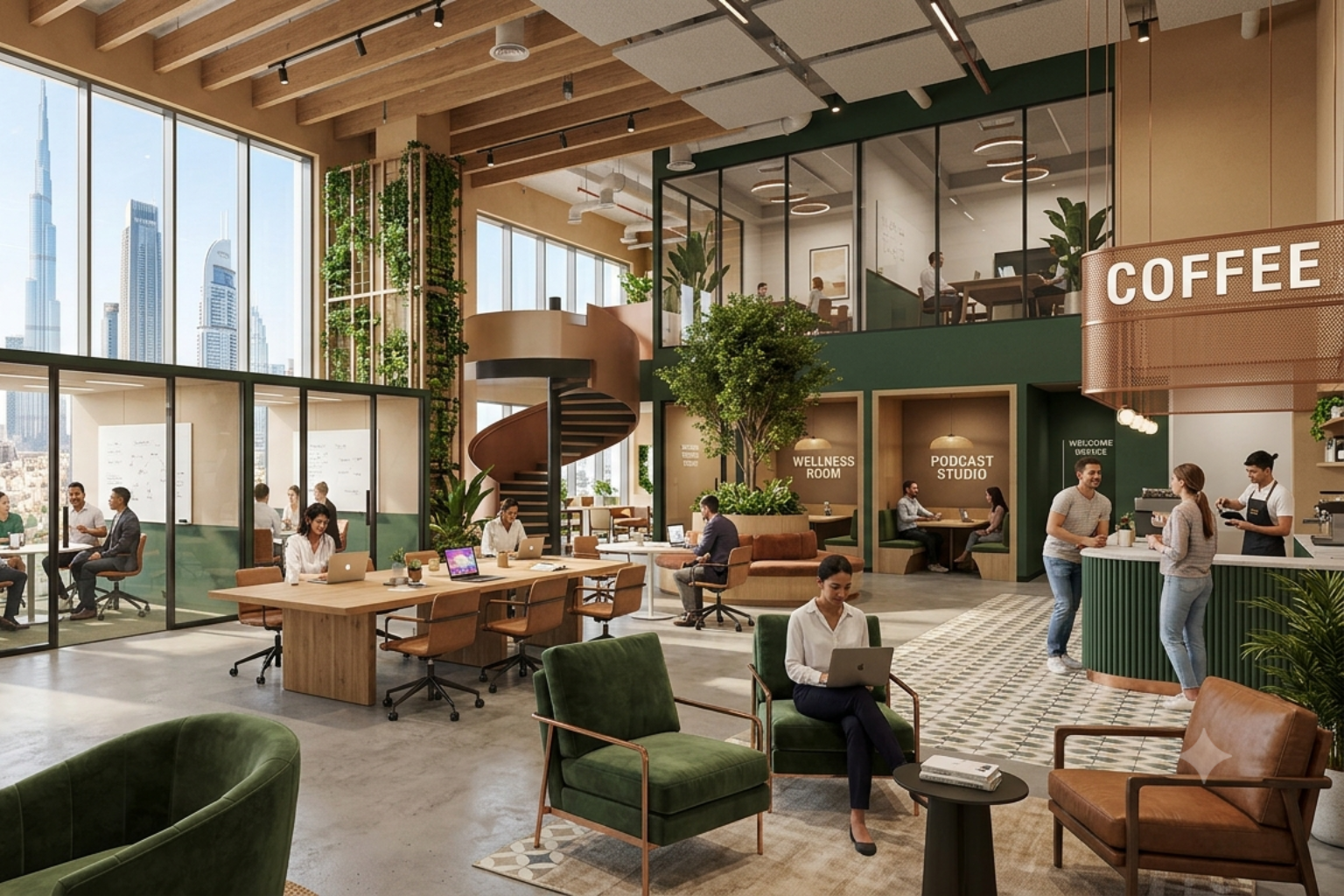
One of the most common design mistakes is creating zones that look great in a rendering but do not match how people actually work. A well-planned coworking space usually includes a mix of areas suited to different tasks.
- Quiet zones for focused, uninterrupted work
- Casual lounge areas for informal conversations and breaks
- Bookable meeting rooms of varying sizes
- Phone booths for private calls without disturbing others
- Shared kitchen or breakout areas that encourage people to actually leave their desks
Spaces that get this mix right tend to see much higher day-to-day usage than ones that lean too heavily into just one type of area. Looking at how existing areas actually get used, rather than guessing, is often the best way to decide how much space each zone deserves.
Building a Sense of Community Through Layout
Coworking spaces succeed partly because of community, and layout plays a bigger role in that than most people expect. Open sightlines, shared common areas placed at the center of the space rather than the edges, and seating that naturally puts people near each other all encourage the kind of casual interaction that keeps members coming back. A space that isolates everyone into closed-off corners rarely builds the same energy.
Technology and Amenities That Support Modern Work
Today’s coworking members expect more than just a desk and Wi-Fi. Charging points built into furniture, video call rooms equipped with proper lighting and sound insulation, and printing or scanning facilities that are easy to find all shape whether a space feels genuinely modern or slightly behind. None of these amenities need to be extravagant, but their absence is noticed quickly by members who are used to a certain standard of convenience in their daily work.
Designing for Growth and Change
A coworking space rarely stays static for long. Membership numbers shift, new types of businesses move in, and demand for certain areas, like private offices versus open desks, can change from one season to the next. Designing with this in mind, using modular furniture and flexible partitions wherever possible, makes it far easier to adapt the space over time without a costly renovation every time member needs change. Operators who plan for this flexibility from the outset tend to spend far less on repeated fit-out work down the line.
What Makes a Coworking Space Design Successful
At its core, a successful design balances flexibility with comfort. It needs to adapt as membership numbers change, while still feeling settled and pleasant on a daily basis. Spaces that get this right tend to combine practical, durable furniture with a layout that can be reconfigured without a full renovation every time member needs shift.
Practical Considerations Often Missed
Beyond the visual design, a few practical factors quietly determine whether a coworking space runs smoothly.
- Acoustic treatment to manage noise between zones
- Enough storage for members who work there regularly
- Clear wayfinding so new visitors do not feel lost
- Flexible furniture that can be rearranged for events
Conclusion
A coworking space that people genuinely want to use is not the result of one clever design idea, but of many small decisions made with real working habits in mind. From zoning to acoustics to the everyday comfort of a chair, Coworking Space Design shapes whether a space becomes somewhere people choose to spend their day, or somewhere they only visit once. At Modular Interiors LLC, this is exactly the kind of detail we plan for from the very first conversation.